What to Pack for a Day Hike: Essential Gear You Shouldn't Forget
Author:Alina
|
Released:February 8, 2026
Going on a day hike without the proper equipment can make an adventure into a nightmare. You can conquer a local trail or even a national park, but when you have the essential hiking gear, all the difference.
This list is comprehensive and will help you on your safe and enjoyable day on the trail, including tools of navigation and emergency supplies.
10 Essentials Every Day Hiker Needs
The National Park Service suggests that hikers should always bring the Ten Essentials, no matter how short or easy the hike may seem [1]. These items have helped save lives in unexpected situations.
- Navigation tools
Bring a trail map and a compass. Even if you rely on your phone, batteries can die and signals can weaken in remote areas. A downloaded offline map is helpful, but a paper map is still a good backup. If the trail is confusing, a navigation tool can save time and prevent mistakes.
- Sun protection
Use sunscreen with SPF 30 or higher, UV-protective sunglasses, and a wide-brimmed hat. Sunburn can happen even on cloudy days, especially at higher elevations where UV rays are stronger. Lip balm with SPF is also useful on exposed trails.
- First aid kit
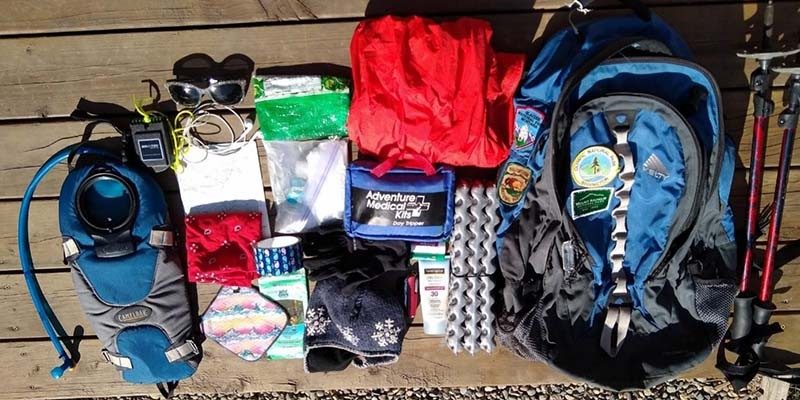
Carry a simple first aid kit for blisters, cuts, scrapes, and minor injuries that often happen on trails. Include items like adhesive bandages, gauze, antiseptic wipes, blister pads, and any personal medication. A small kit is easy to carry and can prevent a minor issue from becoming a major one.
- Headlamp or flashlight
Pack a headlamp with extra batteries. Hikes can take longer than expected, and getting caught in the dark without light is risky. A headlamp is usually better than a handheld light because it keeps your hands free.
- Multi-tool or knife
A multi-tool or knife is useful for gear repairs, food prep, and emergencies. It can help with small fixes like cutting cord, trimming tape, opening packaging, or dealing with unexpected gear problems.
- Fire starter
Waterproof matches, a lighter, or another reliable fire starter can be a lifesaver if you end up stuck somewhere overnight. Even on day hikes, this matters in case you need warmth or need to signal for help.
- Extra clothing
Bring layers that can handle sudden weather changes, especially in higher or colder areas. A compact insulating layer, such as a fleece or light puffy jacket, can make a big difference if temperatures drop.
- Extra food
Pack more food than you expect to need in case the hike takes longer than planned or something delays your return. Snacks should be easy to eat and high in energy, such as trail mix, bars, jerky, dried fruit, or nut butter packets.
- Extra water
Bring enough water for the hike, and consider a way to filter or purify more if needed. A good rule of thumb is to carry enough for the full outing and then a little extra. If the trail is hot, steep, or long, your water needs may be much higher than expected.
- Emergency shelter
Carry a lightweight shelter item such as a bivy, space blanket, or emergency blanket in case you need to wait out bad weather or an unexpected delay. This item is easy to overlook, but it can be important if you are forced to stop moving for any reason.
Footwear and Clothing for Trail Success
The most important piece of equipment you will choose is your hiking boots or trail shoes. American Hiking Society recommends that new shoes should be broken in before heading onto difficult trails[2]. Look for shoes with good ankle support, solid soles, and waterproofing if you expect wet conditions.
Wear moisture-wicking clothes that you can add or remove as the weather changes. Cotton should be avoided because it stays wet and can cause chafing. Base layers made from synthetic fabric or merino wool will keep you drier and more comfortable. Even when the sky looks clear, pack a light rain jacket, since mountain weather can change quickly.
Carry spare socks in a plastic bag or dry bag. Wet feet lead to blisters and soreness, which can end a hike early. Wool-blend hiking socks are usually a better choice than ordinary athletic socks because they provide cushioning and better moisture control.
Break in new footwear slowly before a harder trip. Wear them on short walks first, then increase the distance little by little. This helps prevent hot spots and blisters on the trail.
Hydration and Nutrition on the Trail
Water is non-negotiable. A common rule is to bring at least half a liter per hour of hiking, though hot weather, steep climbs, and dry air may require more. For longer hikes, carry a water filter or purification tablets so you can safely refill from streams or lakes. Dehydration can lead to fatigue, headaches, and poor judgment, which can become dangerous fast.
Food matters just as much. Pack more food than you think you need, especially if the route is unfamiliar or weather could slow you down. Trail mix, energy bars, jerky, and dried fruit are all good choices because they are lightweight, calorie-dense, and easy to eat on the move.
It is also smart to bring one extra meal. If the hike takes longer than expected, or if something forces you to stop early, that reserve can make a big difference. Many hikers underestimate how much energy a day on the trail actually uses.
Choosing the Right Day Pack
A day hiking backpack usually falls between 15 and 30 liters, depending on how much gear you need and how long you plan to be out. A shorter, low-gear hike may only need a compact pack, while a longer route with extra layers, food, and safety items calls for more space.
Look for padded shoulder straps, a hip belt, and compartments that help you organize gear. A pack with a hydration reservoir sleeve is a smart choice if you want easy access to water. That can be useful when you want to sip often without stopping to dig for a bottle.
Fit matters as much as size. Load the pack with books or gear before buying it and walk around the store for a few minutes. The hip belt should sit on your hips, not your waist. The shoulder straps should wrap comfortably without digging into your shoulders or leaving pressure points.
A good day pack should feel stable when you move. If it shifts around too much in the store, it will probably feel worse on the trail. The right pack carries weight close to your body and does not distract you while walking.

Safety and Communication Tools
Always tell someone where you are going, what route you plan to take, and when you expect to return. Also tell them what to do if you do not check in on time. This simple step matters more than many hikers realize.
Carry a fully charged phone in a waterproof case, but do not depend on it as your only safety tool. Cell service can disappear quickly in remote areas. A whistle is small and inexpensive, but it can carry much farther than your voice if you need help.
If you hike in remote places often, consider a personal locator beacon or satellite messenger. These devices can send your GPS location to emergency services even when there is no cell signal. For serious hikers, that extra protection can be worth the cost and the peace of mind.
Hit the Trail with Confidence
You do not need to spend a fortune to build a solid day hiking kit. Start with the basics, then add more specialized gear as your experience grows and your trails become more demanding. Good gear should feel comfortable, keep you safe, and last for many hikes.
Before each hike, check your equipment. Replace expired sunscreen. Make sure your first aid kit is stocked. Test your headlamp batteries. Refill water treatment tablets if needed. These small habits take little time, but they help prevent big problems on the trail.
A strong checklist does not make hiking complicated. It makes it easier to enjoy the hike without worrying about what you forgot.
References
[1] Hiking Safety - National Park Service - https://www.nps.gov/articles/hiking-safety.htm
[2] Hiking Tips - American Hiking Society - https://americanhiking.org/trip-safety-stuck-in-the-dark/
Related Posts
Outdoor Gear
Emergency Bivvy Bags: What They Are And When You Need One
Outdoor Gear
Best Insulated Outerwear for Cold Weather and Outdoor Use
Outdoor Gear
Understanding Hiking Boot Ankle Support: High Top Vs Low Top Debate
Guides and Tips
From Free to Pro: 13 Best GPS & Navigation Tools for Hikers
Destinations
Top Budget-Friendly Hiking Destinations in Europe You Can Explore
Guides and Tips